Irrigation & Sprinkler Leak Detection in Monroe Township, NJ
Subsurface turf irrigation leaks waste tens of thousands of gallons of water during peak summer watering cycles while eroding residential lawns and driveways. Our dedicated sprinkler leak detection Monroe Township NJ services isolate cracked lateral lines, weeping solenoid valves, and faulty backflow assemblies across Williamstown, Cecil, and the Victory Lakes area.
Soggy Lawns & High Summer Water Bills in Monroe Township
With large residential lots throughout Williamstown, Cecil, and developments surrounding Blue Bell Farms, multi-zone automated lawn irrigation systems are widespread. Because local soils contain high percentages of sand and loose gravel, an underground PVC or poly sprinkler pipe fracture might not always puddle immediately on the surface. Instead, thousands of gallons of municipal or private well water seep downward into sub-surface layers.
Homeowners frequently only discover an irrigation breach when they receive an exorbitant summer water bill or notice localized soggy depressions where turf grass turns yellow and mushy underfoot.
Warning Signs of Sub-Surface Irrigation Line Breaches
- Unexplained Summer Water Bill Surges: Sharp spikes in quarterly water bills even when watering schedules have remained consistent.
- Localized Mushy Spots or Standing Water: Puddles forming along turf pathways when the sprinkler system is not actively running.
- Low Sprinkler Head Pressure: Pop-up sprinkler heads in a specific zone failing to rise fully or sputtering mist instead of a solid spray pattern.
- Constant Meter Ticking: Water meter dials spinning when all household appliances are turned off, stopping only when the dedicated irrigation shut-off valve is closed.
Freeze Fractures & Backflow Preventer Testing Requirements
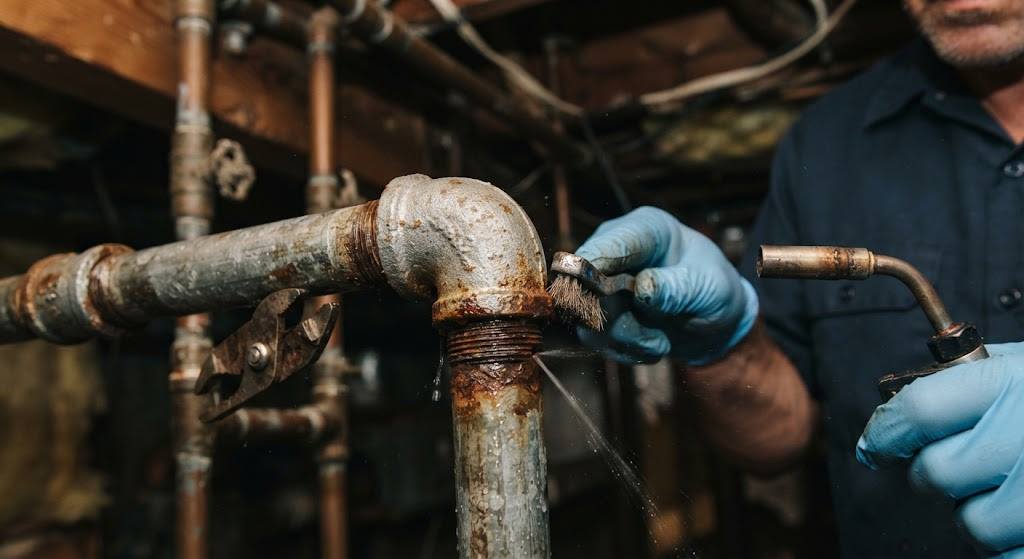
The harsh winter freeze cycles in Gloucester County place severe mechanical stress on irrigation equipment. If winterization blowouts leave water sitting in valve manifolds, copper risers, or underground lateral lines, ice expansion bursts plastic fittings and copper pipes.
Additionally, New Jersey plumbing regulations require backflow prevention assemblies—such as pressure vacuum breakers (PVB) or reduced pressure zone (RPZ) valves—on all residential irrigation feeds connected to potable municipal water. A cracked or corroded backflow valve body not only wastes water through continuous discharge ports, but also risks contaminating domestic drinking water.
Zone-by-Zone Testing & Diagnostic Protocol
Our non-invasive sprinkler leak detection protocol methodically isolates your irrigation system to pinpoint underground line fractures without tearing up your lawn:
1. Main Supply & Backflow Isolation
We inspect and hydrostatically test the main irrigation supply feed between the domestic water source and the outdoor backflow assembly to ensure the high-pressure header is intact.
2. Manifold & Solenoid Valve Testing
We test valve boxes for internal weeping. A valve with degraded rubber diaphragms or stuck solenoids will continuously leak water into lateral lines even when powered off.
3. Zone-by-Zone Pneumatic Pressure Testing
By introducing low-pressure regulated air into individual sprinkler circuits, we track pressure decay rates across each zone, immediately identifying which lateral run is compromised.
4. Acoustic Sub-Surface Pinpointing
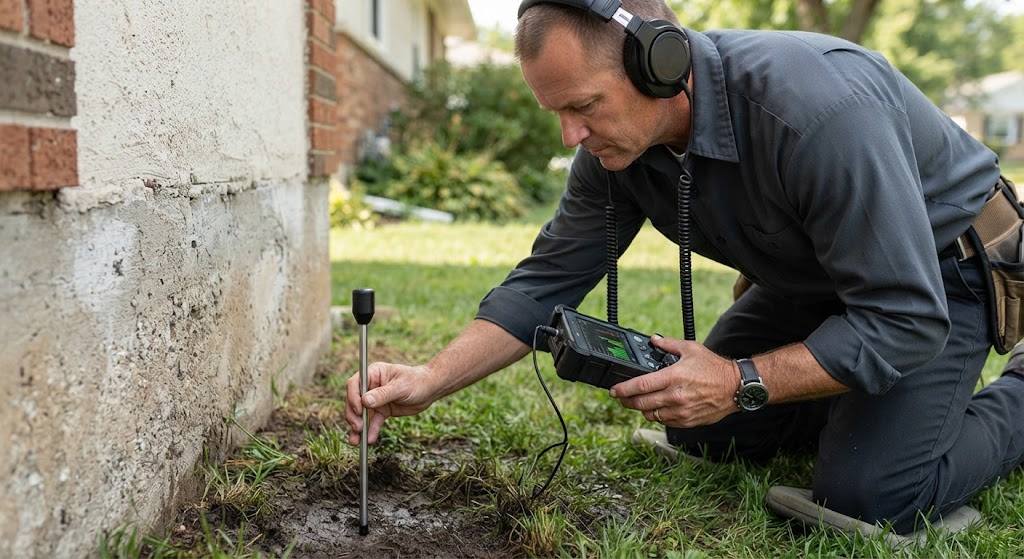
Using ground microphones over the pressurized zone, we detect the specific acoustic frequency of escaping air and water beneath the turf, marking the exact spot for a surgical dig.
Before digging to repair sprinkler lines, ensure NJ One Call (811) has marked underground utility lines across your property.